Getting a Diesel Emission Test? Check These Details First
 Matt Brandt
Today 6:24 AM
Matt Brandt
Today 6:24 AM
Summary
A handful of details decide if a truck can be tested at all: its weight and model year, a VIN that matches the permit, a sealed exhaust, a proper fuel cap and a working data-link connection. Checking them before a diesel emission test takes a few minutes and saves a test that stops before it starts.
Does the Truck Need a Test?
A diesel engine alone doesn't decide it. Ontario's requirement covers heavy-duty diesel commercial vehicles with a registered gross weight over 4,500 kg once the truck is seven or more model years old at plate renewal, or when a new owner registers a truck older than the current model year. The vehicle permit shows the weight and model year, so start there.
The two triggers catch people out. A truck that's only a few model years old may not need a test at plate renewal, but the same truck does need one if it's sold and registered by a new owner. When a truck is changing hands, check the rule for the sale, not just for renewal.
What the Test Includes
Every applicable truck gets a pre-test check and an opacity test. Trucks from 2007 onward with a GVWR up to 6,350 kg also get an on-board diagnostics (OBD) test. Knowing which parts apply tells you what to focus on below.
The Details That Can Stop a Test
The pre-test check comes first, and some problems end the test right there. Walk around the truck and look for:
- A VIN on the truck that matches the vehicle permit
- A fuel cap that's present and fits properly
- Soot marks, cracks or loose clamps along the exhaust, which usually mean a leak
- Heavy smoke at idle or at start-up
- A damaged or loose data-link connector on OBD trucks
These are quick checks, not a diagnosis. Each one, though, is on Ontario's list of conditions that stop a heavy diesel test.
If the Test Stops at the Pre-Test Check
A stopped test isn't a failed opacity or OBD result. The truck simply wasn't tested yet. Some fixes are quick: a replacement fuel cap or a corrected connector can be sorted out fast. Others, like an exhaust leak or a VIN that doesn't match the permit, take a repair or paperwork correction first. Once the problem is dealt with, the truck goes through the full test.
The practical lesson is to do the walk-around before the test is arranged, not while the tester is standing next to the truck.
What the Tester Needs From You
A test goes smoothly when the basics are in place. The truck should be able to start and run normally, the keys and vehicle permit should be with it, and the truck should be parked somewhere it can be safely reached and run. If the truck has had recent engine, exhaust or emissions work, say so at the start. It helps the tester understand what they might see.
Timing the Test Around Renewal
The test is usually tied to plate sticker renewal, so timing matters. Test too late and a failed result can hold up the renewal while repairs are done. Test comfortably ahead of the renewal date and there's room to fix a problem and test again without the deadline pushing you into a rushed repair.
Fleets Testing Several Trucks at Once
When several trucks are due around the same time, a little sorting beforehand saves confusion. Split them into trucks that get the OBD test and trucks that don't, since the checks that matter are slightly different. Match every permit to its truck by VIN. Flag any truck with a warning light, a recent emissions repair or a known exhaust issue, and deal with those first or test them last. Trucks that are clearly ready can go through without waiting on the problem ones.
Safety Inspection or Emissions Test?
They're separate inspections with separate requirements, and a commercial truck may need both. A safety inspection deals with parts such as brakes, steering, suspension, tires, lights and coupling devices. The emissions test deals with exhaust opacity and, where it applies, OBD. Before looking for a safety inspection near you, check what your truck is actually due for. Plenty of owners who think they need a safety inspection are due for an emissions test, or need both. Mobile Truck Emission Test provides emissions testing.
Keep the Permit With the Truck
The VIN on the permit links the test to the truck's DriveON inspection history. Having it on hand also means any question about registration or earlier results can be answered on the spot.
After the Test
The result is recorded electronically against the truck's VIN, but keep your own copy of the report with the truck's records. A pass means the next test will usually come around again at the following renewal. A fail means the report is the starting point for diagnosis, since it shows which part of the test the truck didn't meet.
Before the Test: Common Questions
Q1: Do you do safety inspections too?
A1: Mobile Truck Emission Test provides emissions testing, not safety inspections. For a commercial safety inspection, look for a DriveON Vehicle Inspection Centre or licensed DriveON technician that handles your type of truck.
Q2: Can a truck be tested with a warning light on?
A2: The light alone isn't on the list of conditions that stop the test. On OBD trucks, though, the stored fault behind it can fail the OBD portion, so get the codes read beforehand.
Q3: What's the difference between registered gross weight and GVWR?
A3: Registered gross weight is the weight the truck is registered for, shown on the vehicle permit. GVWR is the manufacturer's maximum weight rating, usually on the compliance label in the door opening. The 4,500 kg testing threshold uses registered gross weight, while the OBD cutoff of 6,350 kg uses GVWR.
Q4: Why are governor problems on the list of test stoppers?
A4: The governor controls engine speed. The opacity test relies on the engine reaching the speeds the procedure calls for, so a governor that isn't working properly can prevent the test from being run.
Q5: Where is the data-link connector?
A5: On most trucks it sits under the dashboard on the driver's side. Check that it isn't cracked, loose or blocked, because a failed connection stops the OBD test.
Q6: Is the pre-test check the same for every truck?
A6: Mostly. The VIN, fuel cap, exhaust and visible smoke checks apply to every heavy diesel truck being tested. The data-link connector check only matters on trucks that get the OBD test.
Test the Truck Where It Already Is
Once these details check out, most of the uncertainty around the test is gone. What's left is getting the truck and the tester in the same place.
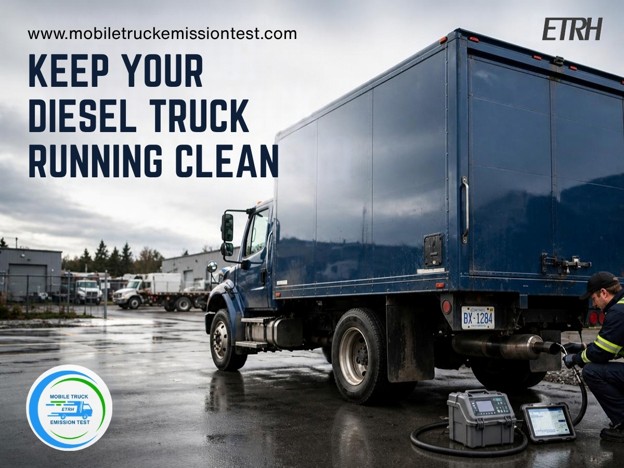
Mobile Truck Emission Test brings diesel emission testing to the truck's location across the GTA, so a truck that's ready can be tested where it's parked.
Comments